
Many coffee drinkers rely on K-Cups because they are fast, clean, and consistent. One button. One cup. No mess. But there is one question almost everyone asks at some point: how much caffeine is in K-Cup coffee?
This question matters more than people realize. Caffeine affects energy, focus, mood, and even sleep quality. Some people drink coffee to feel sharp and productive. Others want a gentle boost without the jitters. Because K-Cups come in many types, strengths, and roast levels, caffeine content can vary a lot.
If you assume every K-Cup delivers the same kick, you may feel disappointed or overly wired. That is why understanding caffeine levels helps you make better choices for your daily routine. Morning productivity, afternoon crashes, and late-day rest all depend on how much caffeine you consume.
K-Cups also confuse many buyers because brands rarely list exact caffeine numbers on the box. Labels focus on flavor notes, roast level, or intensity. However, “bold” does not always mean “strong in caffeine.” Dark roast does not always equal more energy. These small details make a big difference.
This article will clear up your confusion. You will learn how much caffeine is typically in a K-Cup and what factors affect it. And how to choose the right pod for your needs. Whether you drink coffee once a day or several times a day, this knowledge helps you stay in control.
By the end, you will confidently understand how much caffeine is in K-Cup coffee and how to adjust your intake without giving up convenience or taste.
How Much Caffeine in K Cup Coffee on Average?
When people ask how much caffeine is in K-Cups, the short answer is this: most standard K-Cups contain 75 to 120 milligrams of caffeine per 8-ounce cup. However, this number changes depending on several factors.
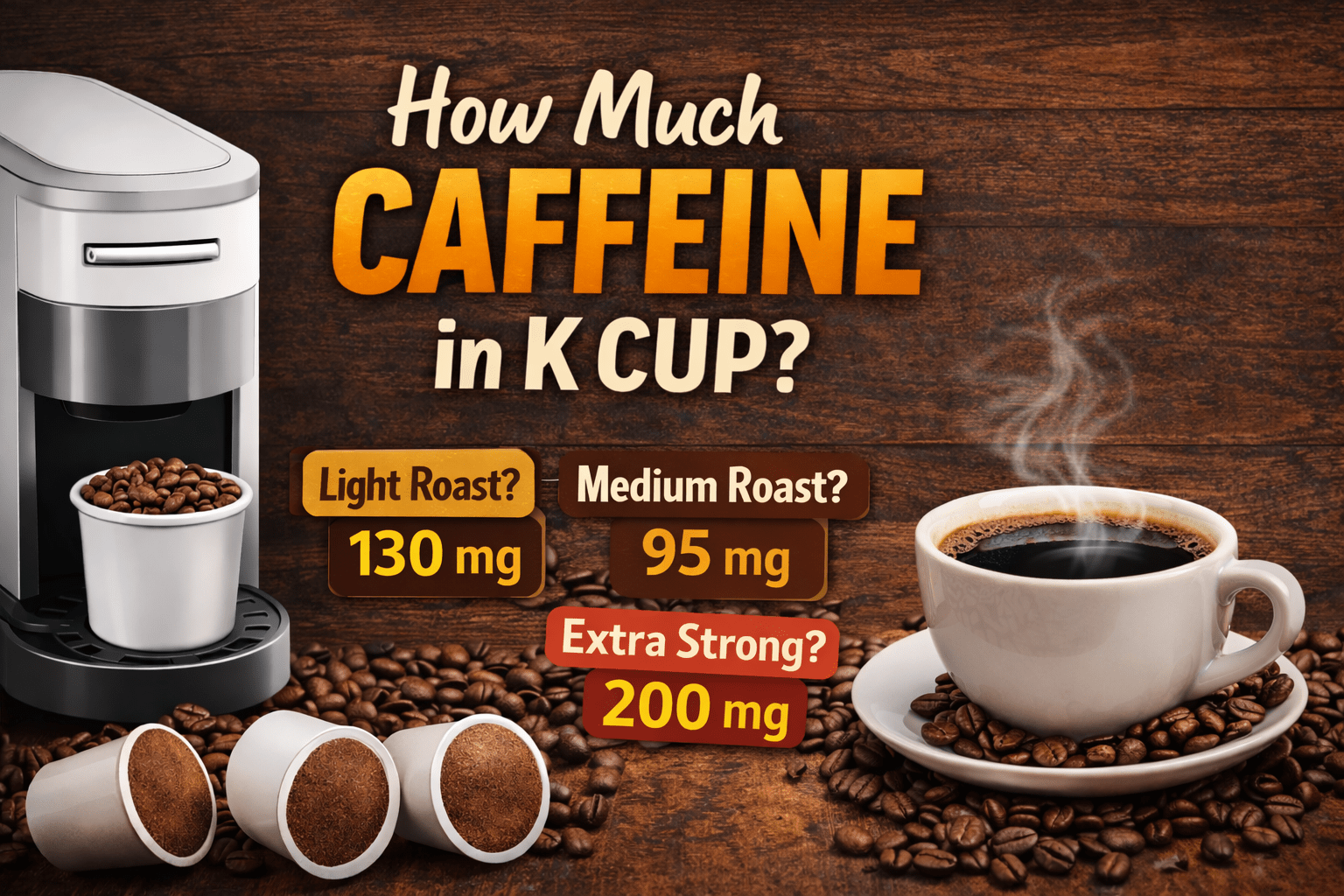
A regular medium-roast K-Cup usually sits around 90 to 100 milligrams of caffeine. This amount is slightly lower than a traditional drip coffee, which often contains 120 to 140 milligrams per cup. Still, it is enough to provide alertness and focus.
Light-roast K-Cups often contain more caffeine than dark roasts. This surprises many people. Light roasts keep more caffeine because the beans spend less time roasting. Dark roasts lose small amounts of caffeine during roasting, even though they taste stronger.
Extra-bold or “high-caffeine” K-Cups can contain 130 to 200 milligrams of caffeine. These pods are designed for people who want maximum energy in one cup. They are popular among early risers and busy professionals.
Decaf K-Cups are not caffeine-free. Most decaf pods contain 2 to 15 milligrams of caffeine per cup. This amount is low but still noticeable for sensitive drinkers.
Cup size also matters. Brewing a 10-ounce cup spreads the caffeine over more liquid, making it feel milder. Brewing a 6-ounce cup concentrates it, making it stronger.
So, when considering how much caffeine is in K-Cup coffee, always look beyond the label. Roast level, brand, and brew size all play a role.
What Influences How Much Caffeine in K-Cup Pods?
Many elements decide how much caffeine in K-Cup coffee actually reaches your cup. Once you understand these elements, choosing the right pod becomes easier and more intentional.
The type of coffee bean makes a clear difference. Arabica beans naturally contain less caffeine and deliver a smoother taste. Most K-Cups rely on Arabica beans for balance and drinkability. Some high-energy pods add Robusta beans to increase caffeine and intensity.
Roast level also affects caffeine content. Light roasts usually retain more caffeine because the beans spend less time at high temperatures. Dark roasts develop a stronger flavor, but they often lose small amounts of caffeine during roasting.
Grinding and brewing also play a role. K-Cups use a controlled grind size to allow quick extraction. However, each brand fine-tunes its brewing process. This changes how much caffeine is pulled from the coffee during brewing.
Cup size selection changes strength. A smaller cup delivers a more concentrated caffeine effect. A larger cup spreads the caffeine over more liquid, making it feel milder.
Brand formulation matters more than most people realize. Some companies design K-Cups for high energy and bold stimulation. Others focus on smoothness, low acidity, and comfort. Two pods labeled the same roast can feel completely different.
Freshness also impacts how caffeine feels. Older pods can lose aroma and strength, which may make the caffeine seem weaker, even when the amount remains similar.
Knowing these factors keeps you in control. You stop guessing and start choosing K-Cups that truly match your energy needs and taste preferences.
Comparing K-Cup Caffeine to Other Coffee Types
To fully understand how much caffeine is in K-Cup coffee, it helps to compare it with other popular drinks. This gives useful context for daily caffeine planning.
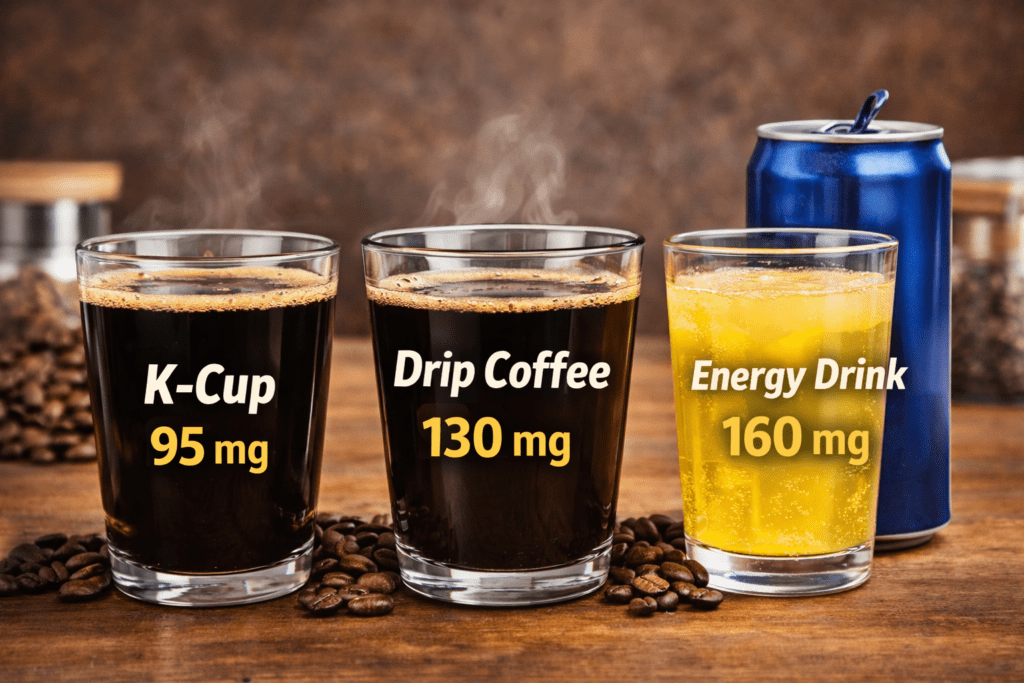
A standard drip coffee usually contains 120 to 140 milligrams of caffeine per 8-ounce cup. This makes drip coffee stronger than most K-Cups, especially light-roast versions brewed at home.
An espresso shot contains 60 to 75 milligrams of caffeine. Although espresso tastes intense, it delivers less caffeine per serving because it has a smaller volume. Two espresso shots roughly equal one strong K-Cup.
A cold brew coffee contains 150 to 200 milligrams of caffeine per cup. Cold brew extracts caffeine over many hours, resulting in a much stronger drink.
Instant coffee usually contains 30 to 90 milligrams of caffeine. It is often weaker than K-Cups, though premium instant blends can match them.
Energy drinks range widely. Some contain 80 milligrams, while others exceed 200 milligrams. Unlike coffee, these drinks often include added stimulants.
K-Cups sit in the middle. They provide reliable, moderate caffeine without overwhelming the body. This makes them ideal for daily use, especially for people who want consistency.
Knowing these comparisons helps you decide when a K-Cup is enough and when you might need something stronger—or lighter.
Choosing the Right K-Cup Based on Caffeine Needs
Once you understand how much caffeine is in K-Cup coffee, choosing the right pod becomes easy and intentional.
If you want gentle energy, choose a medium or dark roast. These pods offer balanced flavor with moderate caffeine. They are ideal for afternoon coffee or sensitive drinkers.
If you need maximum alertness, look for light roast or high-caffeine K-Cups. These are perfect for early mornings or demanding workdays. Always check brand descriptions for “extra caffeine” labels.
If you drink coffee later in the day, decaf or half-caff pods work well. They provide the comfort of coffee without disrupting sleep.
Pay attention to serving size options on your machine. Brewing smaller cups delivers stronger caffeine effects. Brewing larger cups softens the impact.
Also consider acid content. High-caffeine pods can feel harsh on sensitive stomachs. Choosing low-acid blends helps avoid discomfort.
Most importantly, listen to your body. Caffeine tolerance varies widely. What feels perfect for one person may feel too strong for another.
Smart selection lets you enjoy coffee without side effects. Convenience should never mean losing control over your energy.
Popular K-Cup Brands and How Much Caffeine They Contain
When people search for how much caffeine is in K-Cups, they often want brand-specific answers. Not all K-Cups are created equal. Each brand uses different beans, roast levels, and formulations, which leads to noticeable caffeine differences.
Keurig
Standard Keurig-brand K-Cups usually contain 90 and 100 mg of caffeine per 8-oz cup. Their medium roasts are balanced and consistent. Light roasts may reach slightly higher levels.
Green Mountain Coffee Roasters
Green Mountain K-Cups range between 95 and 120 mg of caffeine. Their breakfast blends and light roasts tend to be stronger. Dark roasts stay closer to the lower end.
Starbucks
Starbucks K-Cups are known for their higher caffeine content. Most contain 120 and 130 mg, while Blonde Roast K-Cups can reach 135 mg. These pods deliver bold energy in a single cup.
Dunkin’
Dunkin’ K-Cups typically contain 100 and 120 mg of caffeine. They focus on smooth flavor with reliable energy, making them popular for everyday drinking.
Peet’s Coffee
Peet’s K-Cups often fall between 120 and 140 mg. Their dark roasts taste strong, while their light roasts deliver a serious caffeine kick.
Death Wish Coffee
Death Wish K-Cups are extreme. They can contain 180-200+ mg of caffeine per cup. These pods are designed for heavy caffeine users only.
The Original Donut Shop
These K-Cups usually contain 90 and 100 mg of caffeine. They offer mild flavor and moderate stimulation.
As you can see, brand choice plays a huge role in how much caffeine you actually consume in K-Cup coffee.
FAQ
Is a K-Cup stronger than regular drip coffee?
Usually, no. A standard K-Cup contains 75 to 120 mg of caffeine, while drip coffee often has 120 to 140 mg per cup. However, high-caffeine K-Cups can exceed the caffeine of drip coffee.
Do light-roast K-Cups have more caffeine?
Yes. Light roasts usually contain more caffeine than dark roasts. This is one of the biggest surprises for people learning how much caffeine is in K-Cup coffee.
Does brewing size change caffeine amount?
The total caffeine stays similar, but brewing a smaller cup makes it more concentrated. Brewing a larger cup dilutes it slightly.
Are Starbucks K-Cups stronger than others?
In most cases, yes. Starbucks Blonde Roast K-Cups often contain 130 mg or more, which is higher than average.
Does a decaf K-Cup contain caffeine?
Yes, but very little. Most decaf K-Cups contain 2–15 mg of caffeine per cup.
Which K-Cup has the most caffeine?
Currently, Death Wish Coffee K-Cups rank among the strongest, with 180–200+ mg of caffeine per cup.
Conclusion
Understanding how much caffeine in K-Cup coffee gives you power over your daily routine. Instead of guessing, you can drink coffee with intention and confidence.
On average, a K-Cup contains 75 to 120 milligrams of caffeine. Light roasts often deliver more. Dark roasts deliver less. Specialty high-caffeine pods push much higher. Decaf still contains small amounts.
Caffeine content depends on bean type, roast level, brew size, and brand design. No two K-Cups are the same. That is why reading labels and understanding basics matters.
K-Cups offer consistency, convenience, and control. They sit comfortably between weak instant coffee and intense energy drinks. For most people, they provide enough stimulation without excess.
When you know how much caffeine in K-Cup coffee suits your body, you reduce jitters, avoid crashes, and protect your sleep. You also enjoy coffee more because it works with your lifestyle, not against it.
Coffee should support your day, not sabotage it. The right K-Cup at the right time makes all the difference.
Choose wisely. Brew intentionally. And let caffeine work for you—not the other way around.