
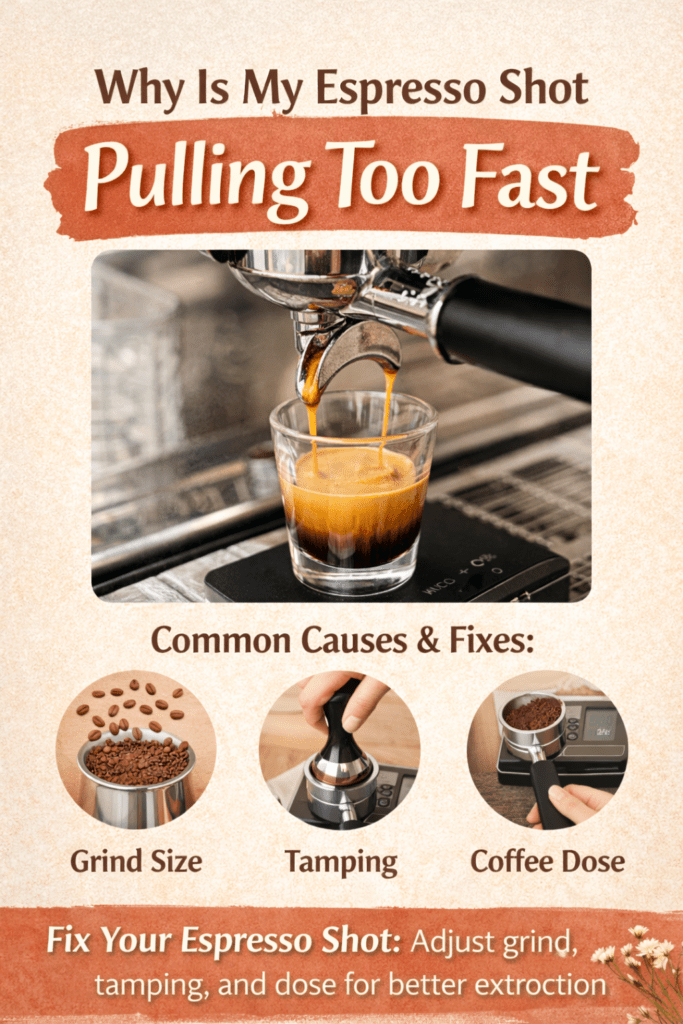
Have you ever pulled an espresso shot and noticed it racing through the portafilter? If you’ve asked yourself, why is my espresso shot pulling too fast, you’re dealing with a very common espresso issue. This problem shows up in home setups and professional cafés alike. When a shot finishes too quickly, it rarely delivers good flavor. Instead of a thick, rich stream, the espresso runs thin and ends early. The taste often feels weak, overly sharp, or unexpectedly espresso-bitter.
To understand why my espresso shot is pulling too fast, you first need to understand the extraction process. Espresso relies on controlled pressure and time. Hot water must move slowly through finely ground coffee. When resistance is too low, water escapes quickly. This short contact time leads to under-extraction. The coffee cannot release enough sugars or oils. As a result, the shot lacks depth and balance, leaving behind sour notes or flat bitterness.
New espresso drinkers often blame the machine. In most cases, the equipment works fine.
The real causes usually involve grind size, coffee dose, or puck preparation. Even small inconsistencies can dramatically speed up extraction. The positive news is that this issue is easy to correct. You do not need to buy new gear. You need better control over your process.
In this article, you’ll discover exactly why my espresso shot is pulling too fast, what triggers it, and how to slow the extraction the right way. I’ll also explain how espresso ratio influences flow, why bitterness appears in fast shots, and how to achieve consistent, balanced espresso every time. By the end, you’ll pull shots with confidence instead of frustration.
Why Is My Espresso Shot Pulling Too Fast? The Core Reasons Explained
When someone asks why my espresso shot is pulling too fast, the answer almost always relates to insufficient resistance during brewing. Espresso relies on pressure meeting resistance. When that resistance drops, water rushes through the coffee puck instead of extracting flavor slowly.
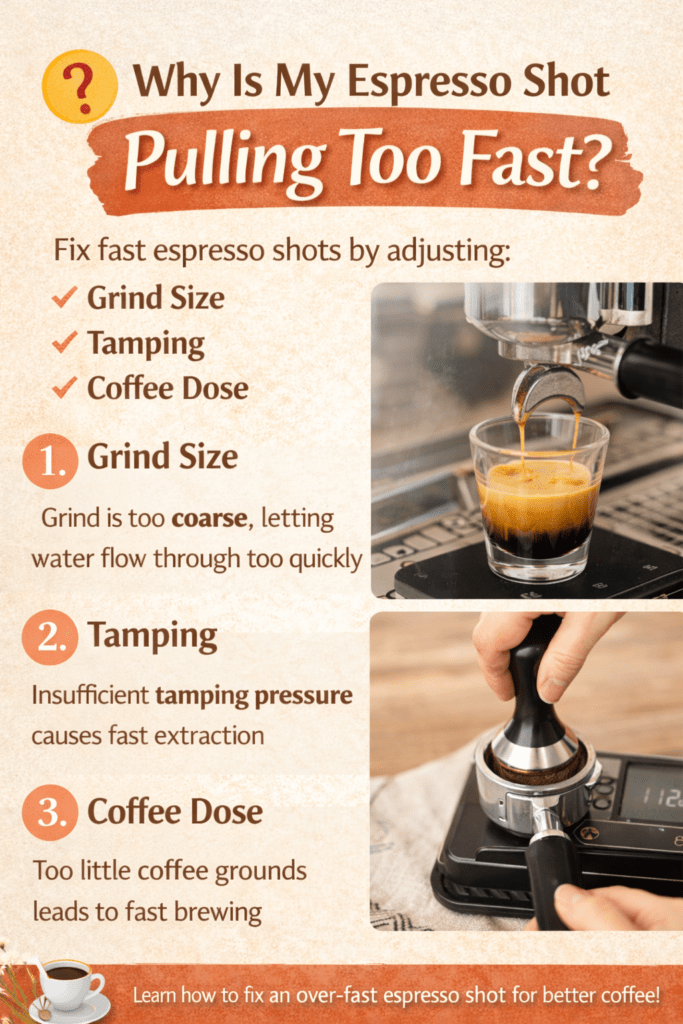
The most common cause is grind size. Coffee that is ground too coarsely creates larger spaces between particles. Water naturally follows the easiest path, so it flows through the puck quickly. Even a slight adjustment toward a finer grind can noticeably slow the shot.
Dose also plays an important role. Using too little coffee results in a shallow puck. A thin puck cannot create enough resistance to slow the water. Weighing your coffee helps maintain consistency and prevents accidental under-dosing.
Tamping mistakes can make the problem worse. If the puck is uneven or tamped lightly, weak areas form. Water targets those areas and escapes quickly, leading to channeling and rapid extraction.
Bean freshness is another factor many people overlook. As coffee ages, it loses carbon dioxide. This gas helps create resistance during brewing. Without it, water flows faster, even if everything else looks correct.
These factors often combine. When they do, fast extraction becomes unavoidable until adjustments are made.
Grind size is the most powerful tool for controlling espresso flow. If your shot runs fast, your first step should bettor first step. A finer grind increases resistance, forcing water to slow down as it passes through the puck.
Changes should be small and controlled. Large jumps can choke the machine or swing extraction too far in the opposite direction. After each adjustment, pull a shot and observe the flow.
Alongside grind size, espresso ratio plays a critical role. Ratio describes how much liquid espresso you produce compared to the amount of dry coffee used. A common starting point is a 1:2 ratio, such as 18 grams of coffee producing 36 grams of espresso.
If you reach your target yield too quickly, the shot is pulling too fast. Many people rely only on time, but weight offers greater accuracy. Measuring both input and output removes guesswork and improves repeatability.
Once the ratio remains stable, brew time becomes a useful diagnostic tool instead of the main target. When grind size and ratio align, extraction naturally slows. The espresso gains body, crema improves, and flavors become more balanced.
Why a Fast Espresso Shot Can Still Taste Espresso Bitter
It may seem counterintuitive, but a fast shot can still taste espresso bitter. This happens because uneven extraction creates conflicting flavors within the same cup.
When water rushes through the puck, some areas under-extract, producing sour notes. At the same time, channeling causes other areas to over-extract. These zones release harsh, bitter compounds early in the brew. The result is a confusing mix of sourness and bitterness.
Poor puck preparation often causes this imbalance. Uneven distribution or crooked tamping encourages channeling. Taking a few extra seconds to level the grounds can greatly improve extraction uniformity.
Water temperature can also intensify bitterness. Higher temperatures extract bitter compounds faster. When combined with rapid flow, bitterness becomes more noticeable. Once grind and ratio are correct, small temperature adjustments may help refine flavor.
Fresh coffee reduces these problems. Beans within their optimal freshness window extract more evenly, helping flavors stay clean rather than sharp or hollow.
Step-by-Step Fixes for Espresso Shots That Pull Too Fast
Correcting a fast espresso shot requires a calm, structured approach. Random changes often create more problems. Adjust one variable at a time and observe the result.
Start with grind size. Move slightly finer and pull a shot. Watch how the flow changes. The goal is a slower, steadier stream rather than a sudden rush.
Next, confirm your dose with a scale. Choose one dose and keep it consistent while dialing in. Changing dose and grind simultaneously makes troubleshooting difficult.
Then lock in your espresso ratio. Measure output by weight instead of volume. Crema affects volume but not weight, which makes weight more reliable.
Improve puck preparation. Distribute the grounds evenly before tamping. Tap straight and with consistent pressure. Perfect technique is not required, but consistency is essential.
Finally, consider bean freshness. If your coffee is old, adjustments will only help so much. Fresh beans make every other correction more effective.
Repeat the process patiently. Espresso rewards consistency and attention.
FAQ
Why is my espresso shot pulling too fast?
An espresso shot pulls too fast when there is not enough resistance during extraction. This usually happens because the coffee grind is too coarse, the dose is too low, the puck is uneven, or the beans are not fresh. When water flows through the coffee too easily, it does not have enough time to extract flavor properly. This often results in a weak, sour, or unbalanced espresso.
How can I slow down a fast espresso shot?
To slow down a fast espresso shot, start by grinding your coffee slightly finer. Make sure you are using the correct dose and tamping evenly. Follow a consistent espresso ratio and measure your coffee by weight instead of volume. Using fresh beans and making small adjustments one at a time will help you achieve a slower, more balanced extraction.
Conclusion: Solving Fast Extraction Improves Every Espresso Shot
If you frequently wonder why your espresso shot is pulling too fast, remember that espresso is all about controlled flow. When water moves too quickly, extraction suffers. Flavor becomes thin, sharp, or unexpectedly espresso bitter.
Fast shots usually result from coarse grinds, low doses, uneven puck preparation, or an unstable espresso ratio. Each of these reduces resistance and speeds up extraction. When resistance disappears, balance disappears with it.
The solution does not require new equipment. It requires precision. Measure your coffee. Adjust grind size carefully. Respect ratios. Use fresh beans. Watch the flow and make calm adjustments.
When extraction slows into the correct range, espresso changes dramatically. Sweetness appears. Acidity becomes pleasant. Bitterness fades. Shots become repeatable and enjoyable.
Once you understand and fix flow speed, most espresso problems disappear. The question of why my espresso shot is pulling too fast eventually stops coming up—because you already know how to prevent it.